How Legacy Brands Survive Gen Z
What makes a brand impossible to ignore is rarely the product alone. Recognition is built when a company manages to become both familiar and culturally current at the same time. The strongest brands understand that relevance is not about abandoning heritage; it is about translating it for a new generation without losing the codes that made the brand iconic in the first place.
Adidas’ latest World Cup campaign, Backyard Legends, feels less like a sports commercial and more like a cinematic universe. Instead of relying purely on athletes, the brand places Timothée Chalamet at the center of the story, alongside a cast that spans generations and industries: Zinedine Zidane, David Beckham, Lionel Messi, Lamine Yamal, Bad Bunny, Jude Bellingham and Trinity Rodman. The campaign intentionally mixes old-school football mythology with internet-era celebrity culture, using CGI-enhanced nostalgia and references to the golden age of 90s football advertising.
What Adidas understands is that younger audiences do not consume culture in categories anymore. Sport, music, cinema and fashion now operate inside the same ecosystem. Casting Chalamet, arguably one of the most culturally influential actors of his generation, was not random. It reframed football as entertainment culture rather than simply sport. The campaign essentially treats the World Cup like a blockbuster franchise.
But the most interesting part is the use of legacy figures. Zidane and Beckham are not there purely for nostalgia. They function as cultural anchors. By digitally recreating or referencing older eras of football, Adidas is reminding audiences that the brand has existed across multiple generations of greatness. Heritage becomes proof of credibility, while younger faces like Yamal become proof of future relevance.
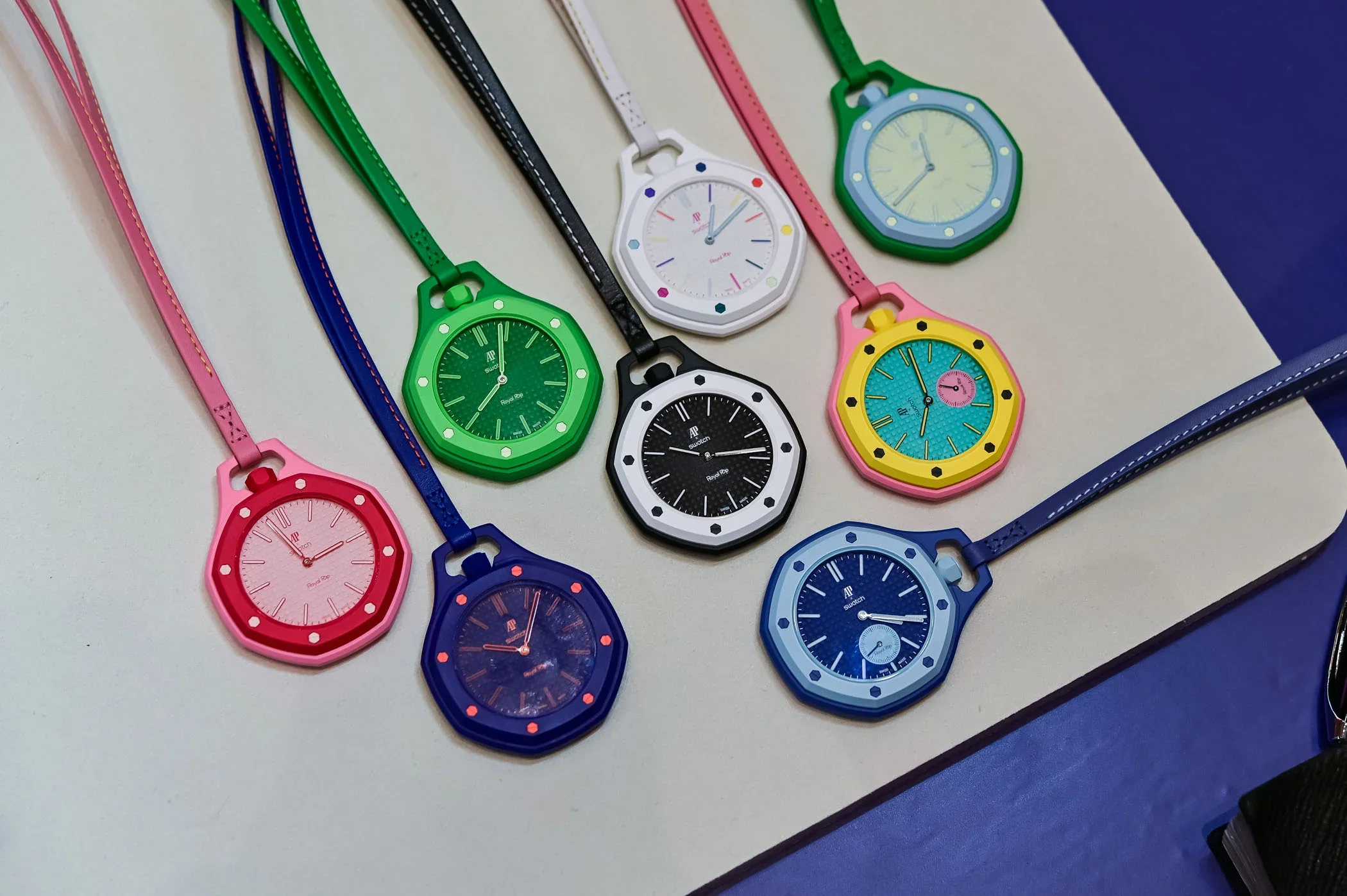
Elsewhere, the newly announced Audemars Piguet and Swatch collaboration, the Royal Pop pocket watch collection, is one of the clearest examples of how heritage brands are trying to survive culturally without diluting themselves entirely. Instead of producing another inaccessible five-figure collector’s item, the collaboration introduces pocket watches priced around $400–$420, a radically lower entry point compared to traditional Audemars Piguet pieces.
This matters because luxury audiences have changed. Younger consumers increasingly care less about exclusivity for exclusivity’s sake and more about participation. Rather than pretending affordability weakens prestige, AP is strategically using Swatch as a bridge into a younger market that may never realistically purchase a traditional Royal Oak. The collaboration keeps the iconic AP design language (octagonal bezels, visible screws, Petite Tapisserie dials) while packaging it inside a more playful, wearable and internet-friendly format.
Importantly, the product itself feels intentionally unconventional. A pocket watch in 2026 sounds almost absurd on paper, which is exactly why it works. In an era where every luxury launch risks looking algorithmically identical, choosing a nostalgic object associated with historical watchmaking immediately creates conversation. Both Adidas and AP are ultimately playing the same game: maintaining legacy while refusing to feel old.