What Makes Talent ‘Next’
As we approach World Art Day, conversations usually tend to centre around creativity and artistic value - today, the definition of an artist, and more broadly of talent, has become increasingly intersect.
In fashion, music and media, what defines relevance shift continuously. Technical skill alone is no longer the primary differentiator. Instead, what is emerging is a new category of creative: individuals who sit at the intersection of different disciplines, culture and identity; people who are able to translate that into a authentic and recognisable point of view.
While younger audiences, particularly Gen Z, are increasingly driving engagement through personality, rather than traditional status signals. At the same time, attention spans continue to shrink, with studies suggesting that users form impressions of visual content in a matter of seconds. In this context, recognition happens quickly but so does dismissal. As a result, talent is no longer evaluated purely on execution, but on immediacy and distinctiveness. What makes someone “next” is not necessarily their level of exposure, but their ability to signal something new, and to do so almost instantly.
Historically, cultural movements have often been driven by individuals operating slightly outside of established systems. Today, this is reflected in the rise of creatives who move fluidly between roles: stylists who direct, dancers who shape visual identity, makeup artists who operate as image-makers rather than technicians. The boundaries are no longer fixed and that is precisely where value is being created.
For brands, this evolution presents both an opportunity and a challenge. Traditional markers of credibility (follower count, past clients, polished portfolios) remain relevant, but are no longer enough. Increasingly, what matters is whether a creative brings a recognisable perspective, and whether that perspective resonates culturally. In fact, discovery has become less about visibility and more about discernment. Being seen does not automatically translate into being remembered, and being remembered does not guarantee being booked. What matters is clarity, and the ability to communicate a point of view consistently across platforms and projects.
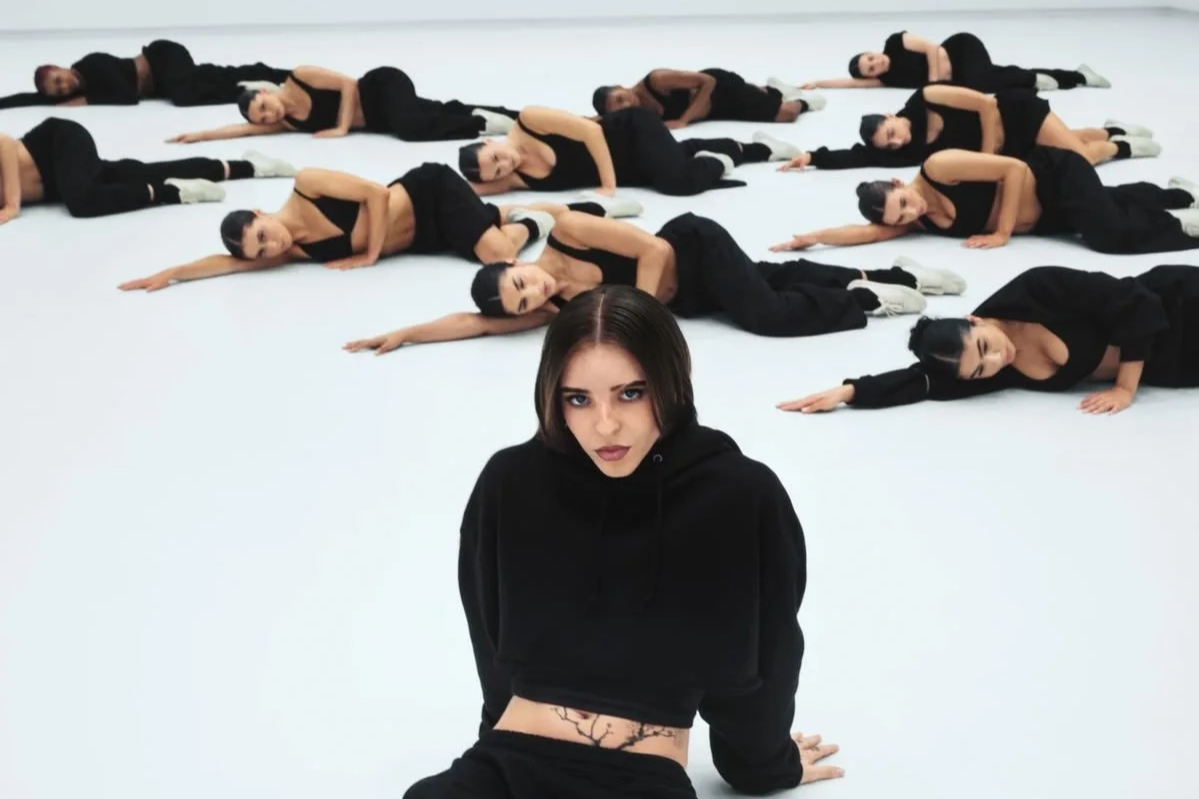
A recent example of this shift can be seen in Gap’s latest collaboration with Spanish rapper Young Miko. Rather than positioning her as a traditional campaign face, the brand built its Spring narrative around her creative universe, reworking her track into a visual and cultural moment that sits between music video and fashion campaign. This marks a notable departure for Gap, not only as its first Spanish-language campaign, but as a signal of how legacy brands are recalibrating their approach to relevance.
From a PR perspective, three elements are becoming more and more significant:
Coherence: your work, your image and your presence should feel aligned. The most compelling talents today are those whose visual identity is immediately recognisable, even across different formats.
Cultural awareness: talent that resonates is often talent that understands where culture is moving. Whether that’s through subcultures or emerging aesthetics, being technically strong is key!
Positioning over exposure: not every opportunity is a good opportunity. In a saturated landscape, selective visibility is more powerful than constant presence. The question is no longer “how often are you seen?” but “how are you seen, and in what context?”
At Maison Hunting, the focus is not simply on representing talent, but on recognising individuals who carry a certain momentum - those whose work suggests not just where culture is, but where it is moving. Because ultimately, what defines “next” is not visibility alone; it is the ability to be seen before everyone else does.